
"Five words sum up every biography -
Video meliora proboque, deteriora sequor
Video meliora proboque, deteriora sequor
I see and approve the good, but follow the bad"
Aldous Huxley


People don’t change because they decide to be better. If that happened, then New Year’s Resolutions would work.
People decide to change because they elevate their loves. And as St. Augustine said, “You become what you love.”
But if you can’t talk about the struggle of sin, if you can’t talk about why some loves are higher than other loves, and ordered versus disordered loves, you don’t have the moral vocabulary, the mental tool kit to think about how to be better.
And the Christian tradition gives us that

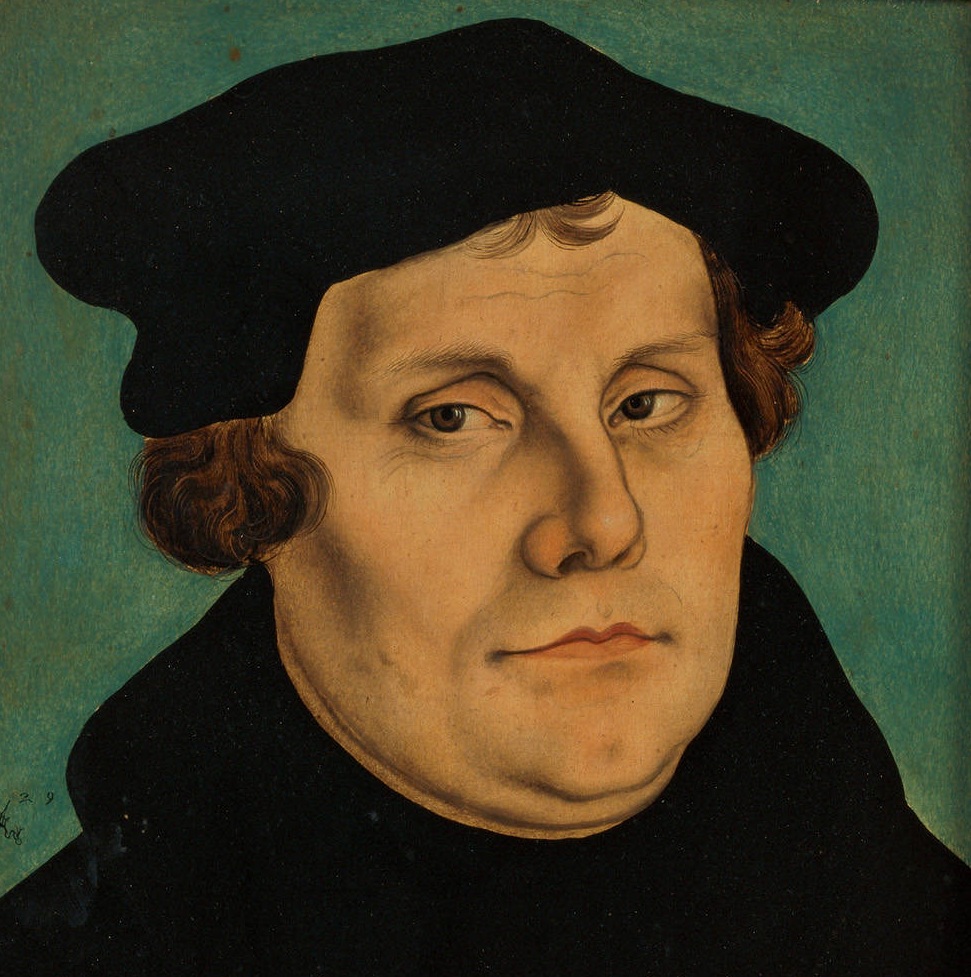

When Martin Luther wrote the Preface to the first collected edition of his many and various writings, he went to town explaining in detail that theology, which should always be based on the Scriptures, should be done according to the pattern modelled in Psalm 119.
There, Luther declared, we see three forms of activity and experience make the theologian.
The first is prayer for light and understanding.
The second is reflective thought (meditatio), meaning sustained study of the substance, thrust, and flow of the biblical text.
The third is standing firm under pressure of various kinds (external opposition, inward conflict, and whatever else Satan can muster: pressures, that is, to abandon, suppress, recant, or otherwise decide not to live by, the truth God has shown from his Word.
Luther expounded this point as one who knew what he was talking about, and his affirmation that sustained prayer, thought, and fidelity to truth whatever the cost, became the path along which theological wisdom is found is surely one of the profoundest utterances that the Christian world has yet heard.

In using these terms we are of course speaking in a human and hence an imperfect language, a fact that makes us cautious. Yet we have the right to speak this language. For just as the Bible speaks analogically of God's ear, eye, and mouth, so human generation is an analogy and image of the divine deed by which the Father gives the Son "to have life in himself."
But when we resort to this imagery, we must be careful to remove all associations with imperfection and sensuality from it. The generation of a human being is imperfect and flawed. A husband needs a wife to bring forth a son. No man can ever fully impart his image, his whole nature, to a child or even to many children...But it is not so with God. (Reformed Dogmatics Vol. 2, p. 308)
We must, accordingly, conceive that generation as being eternal in the true sense of the word. It is not something that was completed and finished at some point in eternity, but an eternal unchanging act of God, at once always complete and eternally ongoing. Just as it is natural for the sun to shine and for a spring to pour out water, so it is natural for the Father to generate the Son. The Father is not and never was ungenerative; he begets everlastingly. (RD Vol 2, p. 310)Gregory of Nyssa spoke well and wisely on this very point:
Again when it interprets to us the unspeakable and transcendent existence of the Only-begotten from the Father, as the poverty of human intellect is incapable of receiving doctrines which surpass all power of speech and thought, there too it borrows our language and terms him "Son,"--a name which our usage assigns to those who are born of matter and nature.
But just as Scripture, when speaking of generation by creation, does not in the case of God imply that such generation took place by means of any material, affirming that the power of God's will served for material substance, place, time and all such circumstances, even so here too, when using the term Son, it rejects both all else that human nature remarks in generation here below,--I mean affections and dispositions and the co-operation of time, and the necessity of place,--and, above all, matter, without all which natural generation here below does not take place.
But when all such material, temporal and local existence is excluded from the sense of the term "Son," community of nature alone is left, and for this reason by the title "Son" is declared, concerning the Only-begotten, the close affinity and genuineness of relationship which mark his manifestation from the Father. (Gregory of Nyssa, Against Eunomius, Book II:9)
It is totally inconceivable, however, how a rational human being who knows himself to deserve punishment could seriously believe that he only has to believe the news of a satisfaction having been rendered for him, and (as the jurists say) accept itutiliter [for one's advantage], in order to regard his guilt as done away with...No thoughtful person can bring himself to this faith.That is Enlightenment man showing incredulity toward the atonement.
Kant, therefore, saw with great clarity the correlation between one's presuppositions about the human predicament and religious epistemology. None of the Enlightenment figures wanted knowledge for invoking the name of God (i.e., the gospel), because they did not believe they needed to be saved. (p. 110)

On Boxing Day [1927] he asked for the Gospel account of the birth of Christ and the massacre of the innocents, and also the entries in the Encyclopedia Biblica, remarking when she [his wife Florence] had finished that there was not a grain of evidence that the Gospel was true.On the final day of his life Tomalin notes the following incident:
Then he dictated to Florence two rough and rude epitaphs on disliked contemporaries. One was George Moore, who had attacked him and was now accused of conceit. The other, ungrammatical but clear in its intentions, went for G. K. Chesterton:It was his final word against Church doctrine and in favour of rational thinking, exemplified by Darwin -- a magnificent blast from the sickbed.
The literary contortionist
Who prove and never turn a hair
That Darwin's theories were a snare...
And if one with him could not see
He'd shout his choice word 'Blasphemy'.
He knew the past like a man who has lived more than one span of life, and he understood how difficult it is to cast aside the beliefs of his forebears. At the same time he faced his own extinction with no wish to be comforted and no hope of immortality.The contrast between this ending and that of the seventy third psalm could not be more pronounced:
Nevertheless, I am continually with you;
you hold my right hand.
You guide me with your counsel,
and afterward you will receive me to glory.
Whom have I in heaven but you?
And there is nothing on earth that I desire besides you.
My flesh and my heart may fail,
but God is the strength of my heart and my portion forever.

When we say that Jesus existed "pre" his incarnation, we do not mean he preceded it by any finite amount of time. The Son of God preexisted his incarnation the way that the Creator preexisted creation: infinitely.Fred Sanders, Embracing the Trinity, p. 85
Preexistence may be easy to say, but that one little syllable, pre-, is a quantum leap from Here to There, from time to eternity. Before you have finished that syllable, you have left behind everything measurable and manageable.


Horace introduced Hardy to the newest and cleverest of the weekly magazines, the Saturday Review, London based naturally, in which social issues were discussed and religion treated with small respect. He bought himself books on geology and science that alarmed his father, because they cast doubt on accepted religious ideas, and handed them on to Hardy.
Horace's upbringing had been more robustly Christian than Tom's, but, making his way in metropolitan literary journalism, he could not miss the spread of scepticism, and he was too quick and intelligent to ignore it.Tomalin also notes the impact of all this on the young Hardy:
Tom's situation was different and easier. Christianity was something he had taken for granted as part of the fabric of everyday life, and Christian theory was never discussed in the family. He read the Bible, he knew all the church services and most of the psalms by heart; indeed, the year was a sequence of church festivals quite as much as it was a sequence of the natural seasons for him.
And he remained a fully practising Christian into the 1860s, but his mind was on the move, and with Horace he began to see that there were questions to be asked and lines of thought to be followed that eroded the old faith. As their friendship ripened, they read the notorious Essays and Reviews of 1860, religious pieces that offended the orthodox by their attacks on doctrine and by their textual criticism of the Bible.
Hardy also claimed to have been an early admirer of Darwin's On the Origin of Species, published in 1859, though it is not clear exactly when he read it, or how much it influenced his thinking at the time. He could well have found his own way along the path towards free thought, but Horace was an encouraging companion on the journey, and with his access to books, guided his steps at many points.Claire Tomalin, Thomas Hardy: The Time-Torn Man, pp. 54-55
The ‘accepted results’ of critical study tend to be taken for granted as a basis for one’s own further study, and radical questions are rarely asked about them. When they are asked, and in a public manner, the presumption is against those who ask them, and any attempt the questioners make to turn back the tide of critical opinion is disregarded, as self-evidently perverse. New ideas receive an open-minded reception, but attempts to revive old ideas are, not unnaturally, seen as simply reactionary.There is more to the clash of orthodoxy and heterodoxy than learning. There is also more to it than spiritual conflict in the lives of individuals. There is also this sociological dimension, and the embedding of new orthodoxies in institutions, guilds and in the public mind. All of which makes the championing of older, historic, mainstream views appear to be little more than a retrograde step, a recrudescence of ideas considered untenable, obsolete and unworthy of re-examination.
All things considered, therefore, the revolution in Biblical study which began in England with Essays and Reviews, and the similar revolution which preceded it in Germany a hundred years before, is a revolution which did more harm to the Church than good...in so far as it taught us to approach the Bible unbelievingly, it has hindered the mission of the church ever since. It lies at the root of many of the calamities which have afflicted the church in our own day, and from which, until we repent of unbelief, the church will never recover.

Darkness and silence ruled everywhere around. Above them rose the primeval yews and oaks of The Chase, in which there poised gentle roosting birds in their last nap; and about them stole the hopping rabbits and hares. But, might some say, where was Tess's guardian angel? Where was the providence of her simple faith? Perhaps, like that other god of whom the ironical Tishbite spoke, he was talking, or he was pursuing, or he was on a journey, or he was sleeping and not to be awaked.
Because Hardy remained enough of a Christian to believe that purpose courses through the universe but not enough of a Christian to believe that purpose is benevolent or the attribute of a particular Being, he had to make his plots convey the oppressiveness of fatality without positing an agency determining the course of fate...The result was that he often seems to be coercing his plots...and sometimes...he seems to be plotting against his own characters.A similar assessment has been made by Claire Tomalin in her biography of Thomas Hardy:
To suggest that readers should see that "the President of the Immortals" is meant only to symbolize the forces of society that brought Tess down will not do as a defence. There is something more there, something that makes sport with her sufferings, and making sport with suffering is cruelty.Given the opaqueness of his bleak fatalism, even though he regarded himself as a meliorist, Tomalin offers the following summary:
Neither Hardy nor anyone else explained where his black view of life came from. I have suggested that something in his constitution made him extraordinarily sensitive to humiliations, griefs and disappointments, and that the wounds they inflicted never healed but went on hurting him throughout his life. In a sense he never got over his loss of Christian belief, which removed hope.

Interpreters of Scripture are faced with three inescapable realities they need to address in their interpretive practice:
(1) The reality of God and his revelation in Scripture (theology)(2) The existence of texts containing that revelation that require interpretation (language and literature)(3) The reality of history...the fact that God's revelation to humans...conveyed by the biblical texts, took place in human history.
In essence, therefore, the interpretive task consists of considering each of the three major elements of the "hermeneutical triad" in proper balance: history, language or literature, and theology, with the first two elements being foundational and theology occupying the apex. (p. 42-44)Theology is mediated through history and literature, through the events of history recorded and interpreted in the text of Scripture. But that same theology is also communicated by, among other things, the specific genres, literary devices, word choice, and structure of each book in the canon. The implications of this are considerable for interpreters be they readers in the pew or preachers in the pulpit.

What is your only comfort in life and in death?Thus the Catechism holds together what ought never to be separated. Here we have the God-ward dimension of the atonement (satisfaction) and the polemic dimension (conquest). The latter, however, is dependent on the former.
That I, with body and soul, both in life and in death, am not my own, but belong to my faithful Saviour Jesus Christ, who with His precious blood has fully satisfied for all my sins, and redeemed me from all the power of the devil; and so preserves me that without the will of my Father in heaven not a hair can fall from my head; indeed, that all things must work together for my salvation. Wherefore, by His Holy Spirit, He also assures me of eternal life, and makes me heartily willing and ready from now on to live unto Him.

"See, we are going up to Jerusalem, and the Son of Man will be delivered over to the chief priests and the scribes, and they will condemn him to death and deliver him over to the Gentiles. And they will mock him and spit on him, and flog him and kill him. And after three days he will rise."At another level being delivered over to the Gentiles is a traumatic sign of being under God's judgement. Psalm 106:40-41 speaks of God's people being handed over to the nations as a consequence of being under judgement:
Then the anger of the LORD was kindled against his people, and he abhorred his heritage; he gave them into the hand of the nations, so that those who hated them ruled over them.The same idea is expressed by Ezra as he acknowledges the guilt of the people of God that led to the exile. Ezra 9:7b reads:
And for our iniquities we, our kings, and our priests have been given into the hand of the kings of the lands, to the sword, to captivity, to plundering, and to utter shame, as it is today.In the OT being handed over to the nations was a sign of God's anger. This was happening to Jesus in Mark 15.
He was oppressed, and he was afflicted, yet he opened not his mouth; like a lamb that is led to the slaughter, and like a sheep that before its shearers is silent, so he opened not his mouth.The silence of Jesus before his accusers is a confirmatory sign that he is the suffering servant who will bear the penal consequences of the sins of others by substitutionary atonement (Isaiah. 53:4-6, 10).
If a man has committed a crime punishable by death and he is put to death, and you hang him on a tree, his body shall not remain all night on the tree, but you shall bury him the same day, for a hanged man is cursed by God.Jesus was not personally guilty of any crime that could issue in his death. His death therefore was as a substitute for clearly it was a death that showed him to have been "cursed by God." This point is drawn out of course in Galatians 3:10-13:
For all who rely on works of the law are under a curse; for it is written, "Cursed be everyone who does not abide by all things written in the Book of the Law, and do them." Now it is evident that no one is justified before God by the law, for "The righteous shall live by faith." But the law is not of faith, rather "The one who does them shall live by them." Christ redeemed us from the curse of the law by becoming a curse for us--for it is written, "Cursed is everyone who is hanged on a tree."The significance of this was not lost upon the framers of the Heidelberg Catechism:
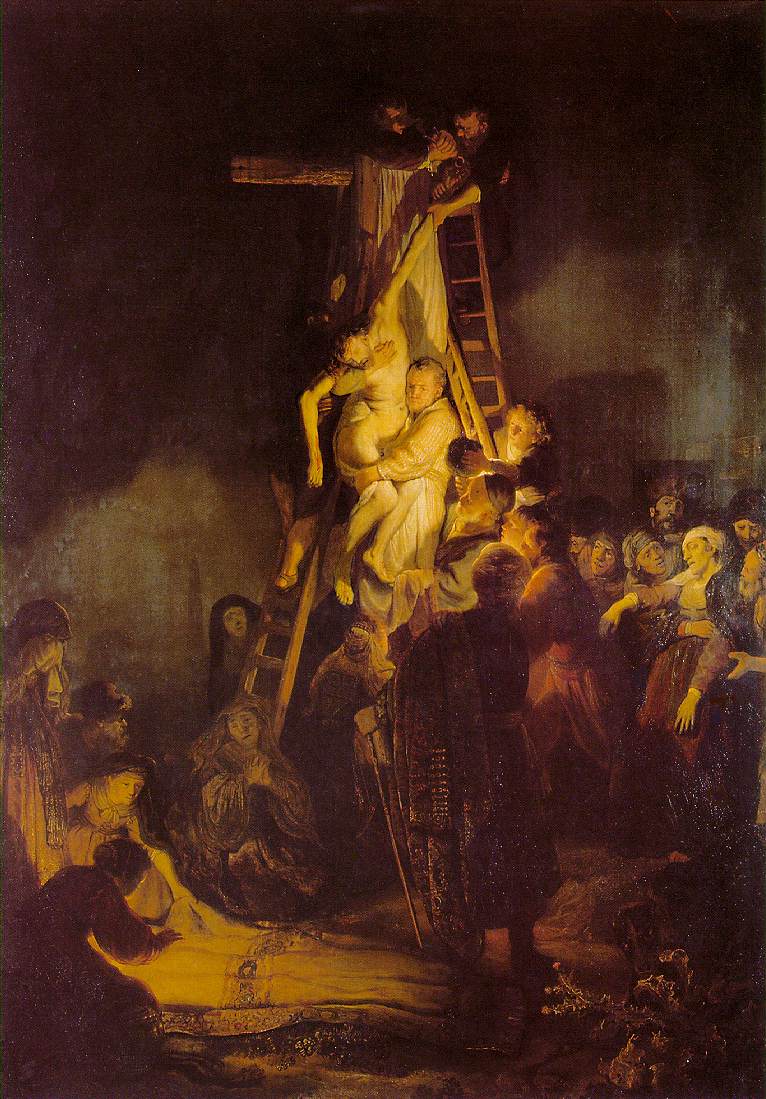
Q. 39 Is there anything more in His having been "crucified" than if He had suffered some other death? A. Yes, for thereby I am assured that He took upon Himself the curse which lay upon me, because the death of the cross was accursed of God.4. He was mocked by his enemies
You have cast off and rejected; you are full of wrath against your anointed. You have renounced the covenant with your servant; you have defiled his crown in the dust. You have breached all his walls; you have laid his strongholds in ruins. All who pass by plunder him; he has become the scorn of his neighbors. You have exalted the right hand of his foes; you have made all his enemies rejoice.In Psalm 89 being scorned by his enemies was a sign that God's king was under God's judgement for his sins. And here in Mark 15? King Jesus is scorned by his enemies. He is the condemned King. The King of the Jews is bearing God's judgement, not for his own sins, but as a substitute for sinners. Similarly compare Lamentations 2:15 with Mark 15:29.
All who pass along the way clap their hands at you; they hiss and wag their heads at the daughter of Jerusalem: "Is this the city that was called the perfection of beauty, the joy of all the earth?" (Lamentations 2:15) And those who passed by derided him, wagging their heads and saying, "Aha! You who would destroy the temple and rebuild it in three days, save yourself, and come down from the cross!" (Mark 15:29-30)The suffering city of Jerusalem, under God's wrath, scorned by her enemies, has been replaced by the suffering Saviour.
"And on that day," declares the Lord GOD, "I will make the sun go down at noon and darken the earth in broad daylight."As Jesus dies even the very elements testify to the presence of God's judgement at the cross.6. He was forsaken by God
And at the ninth hour Jesus cried with a loud voice, "Eloi, Eloi, lema sabachthani?" which means, "My God, my God, why have you forsaken me?"Was God present at the cross when Christ was forsaken? He was spatially as present in Jerusalem then as he is today. Nevertheless in a way that we cannot comprehend but which is the cause of all our hope in time and eternity, we believe that the Son of God knew all the torments of a condemned sinner, and all the relational distance that guilty sinners will endure.
Jesus was visited with penal suffering because he appeared before God only in the guise of our accumulated sin; not therefore as a private individual, but as a representative; sinless in himself, but sin covered; loved as a Son, but condemned as a sin-bearer, in virtue of that federal union between him and his people, which lay at the foundation of the whole. Thus God condemned sin in the flesh, and in consequence of this there is no condemnation to us.The second is from the much neglected Larger Catechism which summarizes the traumatic nature of Christ's humiliation in death as follows:
Q. 49. How did Christ humble himself in his death?
A. Christ humbled himself in his death, in that having been betrayed by Judas, forsaken by his disciples, scorned and rejected by the world, condemned by Pilate, and tormented by his persecutors; having also conflicted with the terrors of death, and the powers of darkness, felt and borne the weight of God's wrath, he laid down his life an offering for sin, enduring the painful, shameful, and cursed death of the cross.

