Thursday, November 16, 2006

On Slippery Slopes, Sermons and Consciences

Here is an extract from a letter on the ministry of the Gospel written by the Welsh preacher John Elias. The letter is dated 16th January 1840:

"There is a great defect in the manner of many preachers. It can scarcely be said that the Gospel is preached by them. Their sermons are very confused; they contain many expressions which are not taught by the Holy Ghost; and subjects are so clothed with new words, that it is difficult to know what is meant.

Thought these preachers may not be accused of saying wht is false, yet, alas, they neglect stating weighty and necessary truths when opportunities offer. By omitting those important portions of truth in their natural connection, the Word is made subservient to subjects never intended.

The hearers are led to deny the truth that the preacher leaves out of his sermons. Omitting any truth intentionally in a sermon leads to the denial of it. Indeed, there are several deficiencies in many ministers; some acknowledge and lament them. There is room to suspect that those defects are intentional in others."

What do you think? Was Elias' assessment in the last paragraph right?

Wednesday, November 15, 2006

Theological Rhetoric as Master and Commander

Bad arguments would not get as far as they sometimes do if we carefully distinguished between rhetoric and substance. It is amazing how much preachers can get away with in print and from the platform just by their rhetoric. For example:

"How we have come to believe that at the cross this God of love suddenly decides to vent his anger and wrath on his own Son?"

Two things to note from this statement.

1. It sounds as if we have ended up drifting thoughtlessly, and recently, into this belief ("how did it ever get to this?").

With a wave of the hand the fact that Christians have believed this truth throughout the history of the Church is passed over (not to mention the libraries of exegetical and theological works that have explained and defended it, the product of great theological minds).

2. Since when was this a sudden decision and act on the part "this God of love"?

And that puts penal substitution in a bad light. It is not just a question but a loaded question, and an unfair question, because it is distorted.

That said we should not be opposed to rhetoric (there are plenty of examples of it in Scripture), but we must not confuse it with worthy arguments. The Serpent after all was remarkably persuasive about the benefits of eating from the tree of the knowledge of good and evil.

We haven't done our work in assessing an opponent's argument until we have figured out if the rhetoric being used serves the argument, or if it is posturing as master and commander.

Tuesday, November 14, 2006

We trust in the blood of salvation

One of the most perplexing and distressing features of evangelical publishing in recent years has been the promotion of Socinian theology. The very ideas that were levelled against the recovered gospel of the Reformation churches are now presented as legitimate evangelical beliefs. This is to turn church history on its head, and to make complete nonsense of the word evangelical.

"Whether Christ laid down his life as a
substitute for sinners was never a question with me. All my hope rests upon it; the sum of my preaching the gospel consists in it. If I know anything of myself I can say of Christ crucified for us, as was said of Jerusalem, 'If I forget thee, let my right hand forget; if I do not remember thee, let my tongue cleave to the roof of my mouth.' I have always considered the denial of this truth as being of the essence of Socinianism."

Andrew Fuller, quoted in Rober Oliver, History of the English Calvinistic Baptists, p. 149

Monday, November 13, 2006

Heresy: The Invasion of the Bodysnatchers

There is no doubt that many heresies can be explained as the dressing up of philosophy in Christian language. Biblical doctrine is abducted and philosophy lurks beneath the surface of Christian words. This is one of the reasons why heresies are so deceptive.

Here is Hippolytus of Rome on The Invasion of the Bodysnatchers:

“It remains, therefore, to hasten on to the refutation of the heresies; but it is for the purpose of furnishing this (refutation) that we have put forward the statements already made by us. For from philosophers the heresiarchs deriving starting-points, (and) like cobblers patching together, according to their own particular interpretation, the blunders of the ancients, have advanced them as novelties to those that are capable of being deceived.”

Hippolytus of Rome, Refutation of all Heresies, Book 5 Ch 1

“It now seems to us that the tenets of both all the Greeks and barbarians have been sufficiently explained by us, and that nothing has remained unrefuted either of the points about which philosophy has been busied, or of the allegations advanced by the heretics. And from these very explanations the condemnation of the heretics is obvious, for having either purloined their doctrines, or derived contributions to them from some of those tenets elaborately worked out by the Greeks, and for having advanced (these opinions) as if they originated from God”.

Book 9, Ch 26

Friday, November 10, 2006

On Gangrene

In 2 Timothy 2 Paul describes false teaching as spreading like gangrene.

Think very carefully before you look at the physical effects of gangrene. You will be sickened by it I assure you. And after the wave of nausea has passed you will feel deep pity for whoever suffers from it.

Do you get the point? How bad is heresy? What kind of metaphors are appropriate to convey to us the damage that it does?

It eats away at life and destroys spiritual health. Whatever is vital is destroyed by its corrupting influence.

In that one word Paul directs our thoughts and feelings to the utter horror of false teaching. Never treat it lightly. By using this image Paul is making an impact not only on the mind but also on the stomach. So much for reducing doctrine to abstract ideas. Bad doctrine is not merely intellectually wrong it is also rotten and stinking.

"Paul aptly compares false doctrines with this deadly contagion. For if once they are allowed in they spread till they completely detroy the Church. Since the contagion is so destructive we must attack it early and not wait until it has gathered strength by progress, for then there will be no time to give assistance. The dreadful extinction of the gospel among the Papists came about because, through the ignorance or sloth of the pastors, corruptions prevailed for a long time without hindrance and gradually destroyed the purity of doctrine."

Calvin, Commentary on 2 Timothy

Heresy: An allegory

Whilst he is away on a journey the city of a great king has come under attack. If the city falls the kingdom will be overrun by the enemies of the king.

Now the king's enemies are crafty men. Even though the serve another master they have disguised themselves as loyal servants of the true king. They are seeking to overthrow the king's rule by changing his decrees and laws. But as they do so they never fail to swear their loyalty to the true king.

Some of the king's subjects have been thrown into great confusion by this. Who has the right to speak for the king and to interpret his wise laws and decrees? Others say that there is room enough in the city for all the officials who say that they serve the king, even if there are differences in how they think about him.

Yet there is hope. The king has true servants. These men are experts at understanding the ways and decrees of the king that he has written down for them in a book. They have been trained to rightly handle the king's law and have been entrusted to oversee his kingdom.

The king's enemies want to overthrow the kingdom not by laying the city to siege but by persuading the king's subjects to follow their interpretation of the king. Instead of attacking the city with a sword they want to poison the minds of the citizens of the land so that they will be duped into a rebellion against the king. When the true king returns they will not recognise him or be willing to live under his rule. What is worse the true king will say that he does not know them. They have been serving someone else all along, even though they claimed (and many no doubt sincerely believed this) to be loyal to him.

If these infiltrators succeed the kingdom will fall. These impostors must be fought. They must be engaged in debate. Their lies must be exposed. The king's subjects need to see who is telling the truth and who is misrepresenting the king. These men are pretenders who must be removed from the city so that their poisonous ideas will be stopped. Their cunningly devised fables are making the king's servants change the allegiance of their hearts.

Even though the king's true officials are peace loving they know that if they do not fight they will have betrayed their king and let his honour be stolen from him.

Thursday, November 09, 2006

Don't trust the snake's interpretation

"Since the early modern era, a number of historians and theologians have tried to demonstrate that the heretics--the innovators, the non-conformists, the protestors--were the truest and best imitators of Christ, no matter how far removed their doctrines might be from what he did and taught...It is not necessary to think that heretics are the truest Christians, or the best followers of Christ. Indeed, we should not, for to do so would be false."

Harold O. J. Brown, Heresies, p. 4

Wednesday, November 08, 2006

Think of a heretic...

Who is the first heretic that comes into your mind?

These days mine's an Italian by the name of Sozzini

(Please include your choice for the record. Comments are appreciated)

Against Heresy Hunting or "Look Ma I shot a big one!"

In the mudslinging that goes on between different, or shall we say competing, orthodoxies, one side can safely secure points by accusing the other one of being heresy hunters.

Sometimes the mud sticks. It is possible to be pre-occupied with error in a way that is spiritually unhealthy. If you start using your Bible predominatly as a text to prosecute the errors of others then you are in trouble.

Sometimes it doesn't stick, but if you throw it anyway you will make your accusers look bad, even if they are right in their assessment and motives.

There is more to theological warfare than sound arguments. Indeed, bad arguments can be very persuasive and tenacious just by using clever rhetoric.

But who ever said that killing snakes was easy?

Tuesday, November 07, 2006

So what is the first thing that comes into your mind...

...when you hear the word heresy?

It has to be the very first thing

And please leave a comment

How far can you go?

Q. When someone moves from orthodoxy to heresy how far can they go?

A. All the way to hell.

That is shockingly blunt. You ought to read the question and answer again with what Packer calls a "traumatic awe." We do not want it to be so, but we are not fit to arbitrate on these matters or to run the universe.

Orthodoxy is serious. Heresy is serious. Neither are playful word games.

"...just as there are doctrines that are true, and that can bring salvation, there are those that are false, so false that they can spell eternal damnation for those who have the misfortune to be entrapped by them."

Harold O. J. Brown, Heresies, p. 4

Monday, November 06, 2006

Against Salvation


"Traditionally, the church has been symbolized by an ark; those who board the ark will survive the deluge. Heresy not merely undermines one's intellectual understanding of Christian doctrine, but threatens to sink the ark, and thus to make salvation impossible for everyone, not merely for the individual heretic."


Harold O. J. Brown, Heresies, p. 2

Friday, November 03, 2006

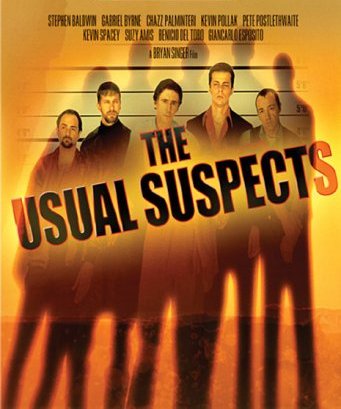
The Usual Suspects: No. 2 The Sincere Misinterpreter


According to Bob Sheehan this is the second type of errorist found in the NT:

"With great sincerity people can turn the meaning of Scripture into something quite other than that which the author intended."

Furthermore:

"The Corinthian church had evidently received a letter from Paul in which he had instructed them to be separate from the immoral, the materialistic and the idolatrous. They understood him to mean that they must work out of a monastic lifestyle by which they kept their distance from all such people in the world (1 Cor. 5:9)."

"For the Corinthians to interpret Paul in this way was not at all unreasonable. They were surrounded by religious Jews who sought to avoid contact with immoral and idolatrous people. Did not the pharisees bathe themselves if they even came into contact in the market with some Gentile?...It was not unreasonable to think that Paul was encouraging some sort of Christian asceticism."

"Even though it can be argued that the Corinthian interpretation was not unreasonable, it was wrong. Paul was requiring disassociation from the person who calls himself a brother, the professing Christian, who is immoral, materialistic or idolatrous."

So far, so good.

"Because he had been misunderstood in something that he had written, Paul had to deal with the misrepresentation, to take away the misconception that had arisen in the Corinthian mind. Condemnation and rebuke might have satisfied some but it would not help the people in Corinth."

And finally:

"Paul's method in dealing with the Corinthians is, of course, the only pastorally responsible method."

A few observations:

1. We are dealing here with the type of person who is fundamentally submissive to apostolic doctrine and authority but who has, at the same time, fundamentally misunderstood an aspect of that teaching. The error is one of wrong interpretation and application rather than a lack of knowledge.

2. There are unhelpful consequences that follow from this misinterpretation for Christian living. These need to be pointed out and corrected. But there is no indication here of a bad attitude that needs to be sorted out.

3. Although he doesn't mention it Sheehan has used a passage where, in the preceding verses, the church has been taken to task and rebuked for failing to deal with immoral behaviour. Paul's approach is measured according to the different kinds of error found in the same church.

4. Without recognising that this kind of error exists it is easy to harm well meaning believers who have sincerely misunderstood the truth. This calls for wisdom. How easy it would be to create further problems by assuming the worst about the motives and mindset involved. The point is not only to be right but to help others to have right understanding.

5. This also calls for humility on the part of those being corrected. Those who believe in the inerrancy of Scripture must recognise that one of the functions of those Scriptures is to provide correction.


Thursday, November 02, 2006

Against narrow-mindedness

Accusing someone of being narrow in their theology is a great rhetorical device.

It is guaranteed to cast your opponent in a bad light. Describing your opponent's theology as narrow instantly makes it, and them, appear extreme and uncharitable. Even good arguments , once they are claimed to be narrow-minded, are looked upon with less favour. The reason for this is obvious. Narrowness is associated with intolerance and being ungenerous. And these, of course, are character traits that we generally wish to shed, not reinforce. Does the verbal mud stick?

It may do. We could of course be narrow about the wrong things. We could be Baptists that exclude from the Lord's table gospel believing Presbyterians. Or we could be charismatics who regard those who have not spoken in tongues as therefore not Spirit-filled believers.

But painting an opponent as narrow minded, of itself, says nothing about the rightness or wrong headedness of their beliefs. And it doesn't communicate anything intelligent about the value and appropriateness of those beliefs, or the character of the person believing them. Of itself it predisposes us to consider that person to be bigoted. The irony of it is that the one making the accusation may well be the intolerant narrow-minded party.

But accusation of narrowness, as I said, is simply great rhetoric. The word itself stirs up the desire in us to be dismissive, and particularly to be dismissive of the intellectual value of an opposing position. But those "narrow views" may well be definite thought out convictions, and definite convictions about things that really matter. And definite convictions that are logically incompatible with other beliefs, and vice versa. Narrowness is an epithet that tells us nothing about the value of someone's beliefs, nor, for the record, their character.

"Narrowness does not consist in definite devotion to certain convictions or in definite rejection of others. But the narrow man is the man who rejects the other man's convictions without first endeavouring to understand them, the man who makes no effort to look at things from the other man's point of view."

J. Gresham Machen, Christianity & Liberalism, p. 160

Tuesday, October 31, 2006

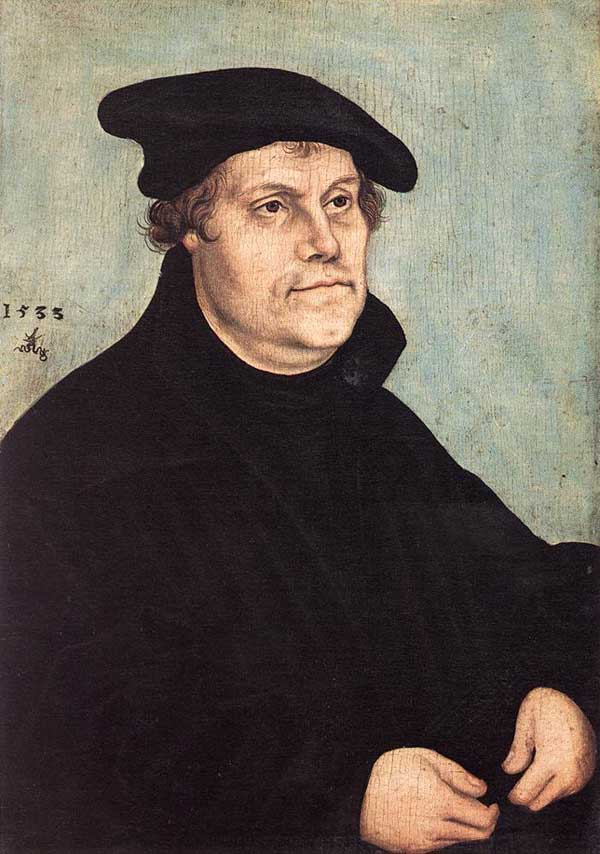
Luther on heresy

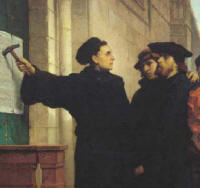
Martin Luther was charged with heresy for his new found view of justification by faith alone. He was urged to recant but refused. After the Diet of Worms in 1521, Charles V issued a letter referring to Luther as "that notorious heretic."

The charge of heresy was a matter of perspective. Luther's conscience was bound by the Word of God. He needed to be refuted out of Scripture and not by popes and councils who had often erred. It was Scripture that would be the highest court of appeal in this matter. Was Luther a heretic at the bar of Scripture?

Heresy is relative to our source and norm of theology. That is the reason why the Roman Catholic Church of the day condemned Luther for heresy. But the right to judge heresy is reserved to Scripture alone.

To say that heresy is a matter of perspective is not to evacuate the term of force or meaning, or to leave heresy in the eye of the beholder. Heresy is a matter of perspective, and that is why Luther appealed to the only perspective that finally mattered, to Scripture itself. And judged by that standard Luther was no heretic at all.

The following quote from Luther is wise advise on one necessary aspect of responding to heresy. Even though heresies distress the Church their existence can have positive results:

"If heresies and offenses come, Christendom will only profit thereby, for they make Christians to read diligently the Holy Writ and ponder the same with industry. … Thus through heretics and offenses we are kept alert and stouthearted and amid wrangles and battles understand God's word better than before."

Saturday, October 28, 2006

Martyn Lloyd-Jones on heresy (and on a t-shirt)


With respect to Frank Turk at Team Pyro here is an extract from a Lloyd-Jones sermon on Ephesians 6:

"The simple fact is that for several centuries the Christian Church was literally fighting for her very life. With the conversion, and the coming in, of those who were trained in Greek philosophy and teaching, all kinds of dangers immediately arose, and the danger became so great as to threaten the whole life of the Church.

People who called themselves Christians, and moved in the realm of the Church, began to propagate teachings that were denials of Christian truth. The threat became so great that the leaders of the Churches held certain great Councils in order to define the Christian faith. Their object was to pinpoint heresies, and to protect the people from believing them. Such confusion had come in that people did not know what was right and what was wrong. So the leaders met together in these great Councils, and promulgated their famous Creeds, such as The Athanasian Creed, The Nicene Creed, and The Apostles’ Creed.

These Creeds were attempts on the part of the Church to define, and to lay down, what is true and what is not true. And in this way they were able to brand certain teachers as heretics, and to exclude them from the life of the Christian Church. The confusion that led to the drawing up of the Creeds was a great manifestation of the wiles of the devil."

Friday, October 27, 2006

Aversion to doctrine is a sign of sickness


Analysing the aversion that evangelicals seem to have toward doctrine has become something of a cottage industry. A fine example of this genre is David F. Wells No Place For Truth. But whatever the cause, or causes, of this condition, the fact of it is a sign of sickness.

Anyone who wants to champion the importance of doctrine is up against it. "Doctrine" is a word that raises prejudices.

Whatever caveats we wish to add about sitting under teaching that was too abstract, or divorced from practice in the way it was communicated, or (what is worse) divorced from actual practice in the church we attended etc, etc. Christian doctrine is absolutely vital. It is no more, and no less, than God's own testimony to his nature, ways, and works in the world and in the salvation he has accomplished in his Son.

But we do not need pulpits to pump out information, data, and raw truth for us to go away to process and apply. No, what we find as we read is that the Bible comes full of applied truth already. Just read through Hebrews 12:18-29. The application of coming to Mount Zion and to Jesus the Mediator of the new covenant is crystal clear:

Do not refuse him who is speaking (25)

Be grateful for receiving an unshakeable Kingdom (28a)

Offer to God acceptable reverential worship (28b)

So there can be no right response to God without us first of all being taught about him and the great salvation in his Son.

A bad attitude to doctrine is something to repent of.

Thursday, October 26, 2006

A Generous Orthodoxy?


The errors of some men are perplexing. Assessing their persons is likewise a troubling task. When men embrace error they can do great damage to the Church. The following comment is both thought provoking and intriguing.

Here is Robert Murray M'Cheyne on Edward Irving:

"I look back upon him with awe, as on the saints and martyrs of old. A holy man, in spite of all his delusions and errors. He is now with his God and Saviour, whom he wronged so much, yet, I am persuaded, loved so sincerely."

Irving (1792-1834) was charged with heresy for his doctrine of "the sinful substance of Christ." Arnold Dallimore notes that:

"...in the midst of such circumstances [action by the presbytery against him], Irving was unmoved and unmovable. He was convinced he was fighting for the truth and that his opposers were the ones guilty of heresy. With all his being he believed Christ was kept from sin by the Holy Spirit and that therein lay the very essence of Christianity--that mankind, too, may have the same measure of the Spirit's power, and experience the same victory."

Arnold Dallimore, The Life of Edward Irving, p. 97

Irving eventually came to trial on 13th March 1833 charged that in his writings he maintained "the sinfulness of the Saviour in his human nature." Irving was found guilty of heresy and deposed from the ministry of the Church of Scotland.

Was M'Cheyne too generous? Had Irving gone too far with his error for M'Cheyne to make any positive (hopeful) assessment?

Monday, October 23, 2006

True or False?

The following is from the pen of that great 19th Century evangelical bishop J. C. Ryle. Read his words and ask yourself if what he is saying is true or false. And if it is true, is that the way that your mind is trained to think? Or do you act as if what he wrote is false?

"Now this 'subtility,' St. Paul tells us, is precisely what we have to fear in false doctrine. We are not to expect it to approach our minds in the garment of error, but in the form of truth...The wolf would seldom get into the fold if he did not enter it in sheep's clothing."

"Such is the simplicity and innocence of many Churchmen in this day, that they actually expect false doctrine to look false, and will not understand that the very essence of its mischieviousness, as a rule, is its resemblance to God's truth...He goes into the church, expecting in his simplicity to hear nothing but heresy from the beginning to the end. To his amazement he hears a clever, eloquent sermon, containing a vast amount of truth, and only a few homeopathic drops of error."

"What discerning eye can fail to see that many Churchmen expect unsound teachers to be open vendors of poison, and cannot realise that they often appear as 'angels of light,' and are far too wise to be saying all they think, and showing their whole hand and mind. But so it is. Never was it so needful to remember the words, 'The serpent beguiled Eve by his subtilty.'"

J. C. Ryle, Warnings to the Churches, p. 130-1

Saturday, October 21, 2006

The Usual Suspects: No. 1 The Sincerely Ignorant

What kind of person could be described as sincerely ignorant?

Bob Sheehan finds a clear example in the record of Acts with the arrival of Apollos in Ephesus. The text is as follows (Acts 18:24-28):

24Now a Jew named Apollos, a native of Alexandria, came to Ephesus. He was an eloquent man, competent in the Scriptures. 25He had been instructed in the way of the Lord. And being fervent in spirit,[c] he spoke and taught accurately the things concerning Jesus, though he knew only the baptism of John. 26He began to speak boldly in the synagogue, but when Priscilla and Aquila heard him, they took him and explained to him the way of God more accurately. 27And when he wished to cross to Achaia, the brothers encouraged him and wrote to the disciples to welcome him. When he arrived, he greatly helped those who through grace had believed, 28for he powerfully refuted the Jews in public, showing by the Scriptures that the Christ was Jesus.

Sheehan comments that "when Priscila and Aquilla heard him preach they recognised his sincerety within the limits of the knowledge that he had, but they knew that his gospel was incomplete. His error was not wilful perversion of the truth but an inadequate grasp of its fulness."

He goes on:

"if the apostolic approach to error had simply been a rule of thumb that all error was to be condemned and treated without any consideration of the pastoral care of the person in error, then Priscilla and Aquilla would no doubt have written Apollos off, but they did not. They issued no public challenge to him nor did they condemn him."


What does this tell us about Apollos? He is commended for his thorough knowledge, as far as it went. Sheehan has some helpful words about the teachable spirit of Apollos:

"This whole incident required a great deal of humility...he was always willing to learn more about the truth. There was no arrogance nor rebellion, no hard heartedness, nor wilful perversity about him."


"Those who are sincere in wanting to know the will of the Lord will be ready to listen to the truth. Those who are full of their own opinions will never be ready to listen to anything but themselves."

Some brief assesments:

1. Discerning error does not end with evaluating doctrine but also includes taking a view of the person involved. Are they teachable? Are they in submission to Scripture and seeking to grow in their knowledge? Are they open to gentle correction? These questions are of critical importance. Of course they are not restricted to observations about others. Am I teachable? Open to correction? Submissive to Scripture?

Perhaps what was most remarkable was not the fact that Apollos was ignorant, but that as someone with a public teaching ministry he was being helped and corrected by others with greater, clearer, and fuller knowledge. The text has the sound of the rustling pages of an open Bible and not that of clashing swords.

2. Damage can be done to those like Apollos by mistaking their ignorance for unbelief and treating them too severely as a result. How can we tell the difference between the two? By asking the questions in point 1. above.

3. Great good can be done for the church and the proclamation of the gospel by taking the approach of Priscilla and Aquilla. For example, in 1929 Dr. Martyn Lloyd-Jones was preaching in a church in South Wales. At the close of the service someone remarked that the cross has little place in his message. Lloyd-Jones went off to read James Denney and P. T. Forsyth works on the atonement. By his own, later, admission his preaching had been imbalanced, stressing regeneration but insufficiently dealing with the atonement and justification. Because of that conversation his ministry changed for the good.

Incomplete knowledge is defective knowledge, but those with incomplete knowledge may not be defective people as a result.

Thursday, October 19, 2006

The Usual Suspects


Error comes in more than one form. We would like, at times, to simplfy this and reduce Church history to the tales of heroes and heretics. But in order to deal with error from a biblical standpoint we need to recognise that there are different kinds of error, and that there ought to be measured responses to those who hold to aberrant views. Treating theological diseases is a matter of rightly diagnosing the cause and providing the cure, patient by patient.

How can we discern the differences? The late Bob Sheehan offered a helpful framework for this in a paper that he gave at a British Evangelical Council conference (the BEC is now renamed Affinity). The paper was entitled "Dealing With False Teaching" and, to my knowledge, is still unpublished.

Here is a short extract:

"The reasons why churches and individuals become ensnared in error are varied. The apostolic approach to error was not simplistic, enabling us to set out slick formula and rules of thumb. The apostolic approach to error was complex because it took all error seriously, but also took into account the nature of the error and the reasons why error had arisen.

The apostles recognised that not everyone who is in error is in a state of open rebellion against the truth. Not everyone in error is seeking to pervert the gospel and overthrow the faith. Other factors have to be taken into consideration when assessing why error occurs in any particular situation."


The only caveat to add to the second paragraph is that the gospel can be perverted and overthrown by someone who is not "seeking" to do so intentionally. Perverting the gospel is an objective act, and the result is a new doctrinal position that can be described, analysed and critiqued. The cause of that perversion, whether it is intentional wide eyed deception, or unintentional (done by sincerely deceived people) is another matter.

In the paper Sheehan describes five kinds of errorists. I would like to call them "The Usual Suspects":

1. The Sincerely Ignorant (Apollos in Acts 18)

2. The Sincere Misinterpreter (the Corinthian monastics? 1 Cor. 5)


3. The Temporarily Inconsistent (Peter in Galatians 2)


4. The Deceived


5. The Fundamentally Unsubmissive (to apostolic teaching)


There will be more to come on these categories, and on Sheehan's explanation of the apostolic response to each group.

Wednesday, October 18, 2006

On this day in history

On the 18th October 1966 Dr. Martyn Lloyd-Jones gave an address on evangelical unity under the auspices of the Evangelical Alliance. The address was a plea for visible evangelical unity at the church level (instead of being exclusively through movements such as the IVF/UCCF). This call for putting gospel unity before denominational unity, and before the demands of a gathering ecumenism that fostered doctrinal indifference, was something of a watershed moment in British evangelicalism.

More on this later. But for now let my give a big endorsement to the two volume authorised biography of Martyn Lloyd-Jones written by his one time assistant Iain Murray.

Volume 1 is a great story of how Lloyd-Jones left the world of medicine (he was assistant to Sir Thomas Horder the king's physician) to become an evangelist in a small mission hall in Aberavon during the time of the depression. The stories of conversions from those years are a thrilling testimony to the power of a preached gospel.

Volume 2 is a must read to have a grasp on evangelical history post WWII. For many years Lloyd-Jones was at the heart of the evangelical resurgence. He was the first chairman of IFES, president of IVF during the war years, involved in setting up London Bible College, the Evangelical Library, a great encourager behind the Banner of Truth, and so on.

In fact many of the great things that Reformed evangelicals enjoy today are his legacy.

Tuesday, October 17, 2006

Sola Fide

How does a believer when guilty of sin continue in a justified state? What does he plead before God?

Here is Owen's answer. The italicised sections are in the original.

"What is it that they betake themselves unto, what is it that they plead with God for their continuance of the pardon of their sins, and the acceptance of their persons before him?

Is it anything but sovereign grace and mercy through the blood of Christ? Are not all the arguments which they plead unto this end taken from the topics of the name of God, his mercy, grace, faithfulness, tender compassion, covenant and promises,--all manifested and exercised in and through the Lord Christ and his mediation alone?


Do they not herein place their only trust and confidence, for this end, that their sins may be pardoned, and their persons, though every way unworthy in themselves, be accepted with God? Doth any other thought enter into their hearts?

Do they plead their own righteousness, obedience, and duties to this purpose?

Do they leave the prayer of the publican, and betake themselves unto that of the Pharisee?


And is it not of faith alone?


...it is faith alone that makes applications unto grace in the blood of Christ for the continuation of our justified estate...our whole progress in our justified estate, in all the degrees of it, is ascribed unto faith alone."

Owen, Justification by Faith Alone, p. 148-9

John Owen: A Generous Orthodoxy


Consider the following from John Owen:

"I no way doubt but that many men do receive more grace from God than they understand or will own, and have a greater efficacy of it in them than they will believe. Men may be really saved by that grace which doctrinally they do deny; and they may be justified by the imputation of that righteousness which, in opinion, they deny to be imputed: for the faith of it is included in that general assent which they give unto the truth of the gospel, and such an adherence unto Christ may ensue thereon, as that their mistake of the way whereby they are saved by him shall not defraud them of a real interest therein.

And for my part, I must say, that notwithstanding all the disputes that I see and read about justification (some whereof are full of offence and scandal), I do not believe but that the authors of them (if they be not Socinians throughout, denying the whole merit and satisfaction of Christ) do really trust unto the mediation of Christ for the pardon of their sins and acceptance with God, and not unto the ir own works or obedience; nor will I believe to the contrary, until they expressly declare it."

Owen, Justifcation by Faith Alone, p. 164

There are boundaries to Owen's generosity.

Socinians are excluded since they are denying and seeking to destroy the "whole merit and satisfaction of Christ".

Those who are trusting in their own works or obedience are excluded. Owen has laboured to show in the previous section that the is only one justification and it is either by the law or the gospel.

Nonetheless his words are generous to those who he considers to be wrong in the way that they have thought about justification in their doctrine but who may yet be right before God (and thus saved by Christ's righteousness imputed to them, which is the only way of being saved) because, in reality, they really are trusting in Christ alone and not in their own works.

Not that he will pass over these things lightly, as if they do not matter. They do, and his work sets out to explain and defend the classical Protestant doctrine of the imputation of our sins to Christ and the imputation of his righteousness to believers. This, he says, is no more or less than the ancient doctrine of the Church of England.

I think that his final comment "nor will I believe to the contrary, until they expressly declare it" is very significant. Whatever the logic of an opponent's position they ought to be given a generous reading, until they expressly state their denial.

Monday, October 16, 2006

John Owen on Lordship Salvation

Pulpit Magazine is running a series on Lordship salvation. Here are some quotations from John Owen's work on justification. Owen has been arguing that the object of justifying faith is Christ in his priestly office, since in it is in his propiatory work that sinners find relief from the guilt of their sin and the wrath of God. But that doesn't mean that his other offices are excluded from saving faith.


"We cannot so receive Christ in the promise, as in that act of receiving him to
exclude the consideration of any of his offices; for as he is not at any time to be considered by us but as vested with all his offices, so a distinct conception of the mind to receive Christ as a priest, but not as a king or prophet, is not faith, but unbelief,--not the receiving, but the rejecting of him."

Owen, The Doctrine of Justification by Faith, p. 117

For Owen the fact that justifying faith is placed in Christ's priestly office does not exclude Christ's kingly and prophetical offices in the same way that works are excluded in justification.

"For, so to believe to be justified by his blood, as to exercise a positive act of the mind, excluding a compliance with his other offices, is an impious imagination."

Owen, p. 121

Surrounding these quotes are several pages of exposition that are well worth reading.

Friday, October 13, 2006

Doctrine is a matter of the heart


On of the saddest things about evangelicalism today is the general aversion that exists to doctrine. I generalise of course, and thankfully there is plenty of evidence to the contrary.

Now, it is worth adding, that the word itself sends wrong signals when similar words do not. It sounds dry and dusty, not vital and refreshing. Doctrine is of course "teaching", and Christian doctrine is what the Bible teaches about x, y and z. But even that is too flat.

You read about Bible doctrine in hefty tomes. But you hear the same teachings in prayer, praise, and evangelism. Doctrine is found in the anguished confession of sin, and thank God, it is found in the sweet assurance of faith resting in the finished work of Christ. It is doctrine that brings comfort to the dying, and to the grieving.

What makes Bible doctrine glorious is that it comes from the Triune God, and it is supremely about the Triune God. It is his words about his work, his mighty acts of creation, providence and redemption. Without doctrine what grasp would we have of these things? How could we call on him? How could we sing his praises? Doctrine is a matter of the heart.

Here are some more thoughts on creeds from B. B. Warfield:

"A scientific statement of vital truth, originating in organic controversy, cannot possibly lack in spiritual quality. It is the product of intellect working only under the impulse of the heart, and must be a monument of the religious life."

"...these creeds are not the products of metaphysical speculation, as many who know infinitesimally little about them are prone to assert, but are the compressed and weighted utterances of the Christian heart."

Thursday, October 12, 2006

Against Shallowness

It pains me to say it but evangelicalism is often intellectually flabby and shallow when it comes to thinking about creeds and confessional statements.

There are several reasons for this at the corporate and personal levels. Doubtless there is the influence of the culture of modernity with its constant impulse toward innovation and incipient disdain for the past.

There is also the acceptance of doctrinal minimalism. This is not only evidenced in the subscription to fewer and fewer doctrines, but even the bare essentials are being described and expounded in fewer and fewer words. So the essentials become assumed with less description than would have been the case in previous generations.

The upshot of all this is that confessionalism is unappreciated. Doctrine is regarded as abstract, and doctrinal statements as no more than the product of abstract thinkers.

Contrast this state of affairs with some stirring words from the incomparable Warfield:

"...it is often the epochs which produced the creeds that produced the deepest feeling and appreciation of those doctrines which are given their most authoritative form of words in the creeds."

"Consequently there is a spiritual power, more or less latent in the creeds and confessions. They bear witness to the excitement of discovery, the joy of salvation, and the strength of conviction which the truth, once discovered, produced in the hearts of those who composed the creeds as a testament to the illumination God had granted them."

Slip Sliding Away

Reformation 21 is an online journal that I very much appreciate. Here are some reflections from two of the blog contributors. One could quibble and argue over one or two points but overall they are sensible reflections.

First, Phil Ryken:

"In looking through Christianity Today's list of the most influential evangelical books of the last half century, one can't help but notice the dearth of substantive theology. There are plenty of experiential biographies, lots of "practical" books for family life and church management, but almost nothing in theology. The notable exceptions, of course, are Tozer, Piper, Stott, and in a way, Schaeffer. We could perhaps include a title that certainly should have made the list: Jerry Bridges' The Pursuit of Holiness. But where are all the books on the incarnation and the atonement?

Too often, the previous generation of evangelicals assumed its theology rather than defended it, especially in more recent decades. If history holds true, the coming generation will be the one that forgets the theology its fathers and mothers loosely accepted but did not inculcate."

And from Rick Phillips:

"The Christianity Today list of the 50 most important Christian books of the last fifty years shows a decided tilt towards Christian experience over Christian truth. In other words, it depicts a pietistic era spanning a half-century (not to be confused with piety itself, pietism is an over-emphasis on feelings and experience).

It has often -- and rightly -- been said that pietism is always the mother of liberalism. If we were to compile a list of the most influential books of the last ten years, they would chronicle a tilt to what has generally been known as liberal theology. The point is that when the church ceases to proclaim, explain, and vigorously defend the Bible's great truth claims, a generation arises in Israel that knows not the Lord.

There will always be legions of people telling you to avoid controversy and doctrinal demands. But their counsel should be discarded. And there will be plenty who will not abide straightforward doctrinal teaching, and they will depart for the multitude of other churches that emphasize experience only. But, as the CT book list and today's mounting liberalism circles illustrates, unless we stand for clear and pointed biblical truths, no one else will either."

Wednesday, October 11, 2006

War and Peace


The ministry of the gospel is a ministry of war and peace.

The irenic nature of the ministry is seen in the message and the conduct of the church.

Ministers of the gospel, as sons of God, are to be peacemakers. The message of the Church is of peace with God through the Lord Jesus Christ. All believers are to show in their conduct the wisdom from above which is peaceable. A harvest of righteousness is sown in peace by those who make peace. The peace of Christ is to rule in the hearts of the Lord's people in the local church. The bond of peace in the church, which is the foundation of the unity of the Spirit that we should be eager to maintain, is the work of the cross. Christ crucified is our peace. He came and preached peace to those who were far off, and peace to those who were near.

But the Christ who makes peace with God through his own blood has enemies. This side of glory, an irenic ministry is not enough. The church militant has a polemic dimension to its work.

There are enemies of the cross. Ministers of the gospel must use the weapons that God provides to pull down strongholds, to demolish pretentious arguments that set themselves up against the knowledge of God. They must not only be able to edify God's people, they must be able to refute opponents as well.

In context (2 Corinthians 10) Paul is not talking about destroying the arguments of pagan philosophers as he debates with them. No, he is speaking of the professing church. He would love to build them up, not tear them down. But he cannot tolerate error, it must be fought against, it must be demolished. Paul is ready for war for the sake of the honour and glory of the Lord Christ.

If you're not prepared to fight then the ministry is not for you.

Pacifism in the ministry is a betrayal of God's church, the flock that he has bought with his own blood.

Here is the admonition of a knight who fought dragons:

"The type of religion which rejoices in the pious sound of traditional phrases, regardless of their meanings, or shrinks from 'controversial' matters, will never stand amid the socks of life. In the sphere of religion, as in other spheres, the things about which men are agreed are apt to be the things that are least worth holding; the really important things are the things about which men will fight.

In the sphere of religion, in particular, the present time is a time of conflict; the great redemptive religion which has always been known as Christianity is battling against a totally diverse type of religious belief, which is only the more destructive of the Christian faith because it makes use of traditional Christian terminology."

Gresham Machen, Christianity & Liberalism, p. 1-2

Monday, October 09, 2006

The Necessity of Fight Club


Previous generations of Christians have left the contemporary Church a great legacy of truth.

Many of the doctrines that are handed on to us were fought for by our grandfathers and grandmothers in the faith stretching back through the centuries.

The truths that they believed, lived by, confessed, taught and proclaimed, were truths that they often had to fight for.

One thinks of the battles for the Trinity, the deity of Christ, justification by faith alone, the sole authority of Scripture, and the substitutionary death of Christ that satisified God's justice.

Contending for the faith was costly in their day. And now to us, in ours, a legacy is left of life giving, soul sustaining truth, to be valued, as we believe, confess, teach, proclaim, and obey.

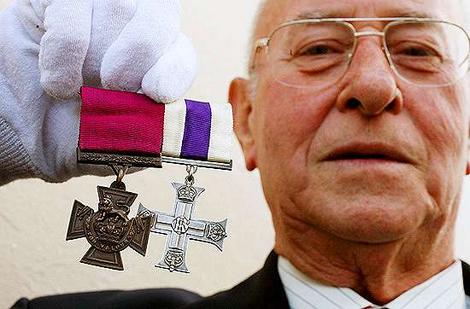
So I try not to think of creeds and confessions as antiques, relics of the past with no use and value in the present. No, they are medals, badges of honour, testimonies to the truth. They are handed on as truths worth believing, worth living for, and worth fighting for.

But the danger with inheriting these riches that have come without personal cost to us, is that we will squander them. Not necessarily but treating them with open unbelief, but by receiving them with a coolness of spirit, and with an aloof heart. They fought. We may not have to, well not immediately. And with that comes great danger.

Of course the truth of the matter is that old battles are fought by new combatants. That is inevitable. Which makes the task of teaching the faith to each generation an urgent task.

"Divine providence as a reality is ever steady, stable, steadfast, sure and strong. Would that this were true for divine providence the doctrine. Divine providence as a doctrine is in great turmoil. Theological earthquakes shake its foundation. This is no time for the weak-kneed and spineless to traverse its volatile terrain. The forces are strong that would topple the classical doctrine of providence, and so must be the resolve of those wishing to reinforce it."

Bruce Ware, God's Lesser Glory, p. 13

Heresy is the crime of identity theft


"If 'reformists' insist on keeping the boundaries of heresy open, however, then they must be resisted with charity.

The fantasy that God is ignorant of the future is a heresy that must be rejected on scriptural grounds ("I make known the end from the beginning, from ancient times, what is still to come"; Isa. 46:10a; cf. Job 28; Ps. 90; Rom. 8:29; Eph. 1), as it has been in the history of the exegesis of relevant passages. This issue was thoroughly discussed by patristic exegetes as early as Origen's Against Celsus.

Keeping the boundaries of faith undefined is a demonic temptation that evangelicals within the mainline have learned all too well and have been burned by all too painfully."


Thomas Oden, "The Real Reformers and the Traditionalists," Christianity Today, Feb. 9, 1998, p. 46

Sunday, October 08, 2006

On departures from the truth


"Heretics all begin by believing, and afterwards depart from the road of faith and the truth of the church's teaching."

Origen

That sentence is agonisingly true.

A spoonful of sugar helps the heresy go down

Here is an extended quotation from Dr. Martyn Lloyd-Jones:

"At the beginning of that century [the nineteenth] there were a number of evangelical denominations and bodies. Then gradually a change came in, a change of emphasis, a change of teaching, but the striking thing about it was the slowness and the subtlety with which it came.

There were, of course, men who were very extreme, and who made bold statements, and almost everybody could see that they were wrong. They did not do the harm. They never do the harm. The obvious, open, arrogant heretic generally produces a reaction, and he is not the dangerous person.

The really dangerous man is the man who introduces some very slight or subtle change...There was a teacher in Scotland called A. B. Davidson. This is the kind of man who really did the harm. He was a professor in Old Testament and Hebrew, and he did the harm in this way. He was a very pious man, a very kindly man, and a very good man, with the result that most of his students did not realise that he was introducing a new element into his teaching as a result of accepting the Higher Criticism.

Now this is the sort of man who has generally done the greatest harm because, to all appearances, and if you looked simply on the surface, you could not see any change at all. It was the little things which he kept on introducing that were the real danger."

D. M. Lloyd-Jones, "What is an Evangelical?" in Knowing the Times, p. 302

Saturday, October 07, 2006

Heresy always affects morality


Chesterton said that "heresy always affects morality, if it is heretical enough." And he was right. But there is a danger with that statement. The danger I think is that we will form in our minds a narrow and set idea of what that immorality will be. And, based on that assumption, we will expect those moving into heresy to be immoral only in that particular way. Otherwise what do you do when you find out that of Fautus Socinus was considered to be morally upright? You would expect the opposite wouldn't you?

But there is more to it than a simple, straightforward, moral failure. This is for two reasons.

1. There can be a logical connection between the particular form of error and the way that sin finds expression.

2. A refusal to be corrected, and to hold on to views that deviate from the gospel, is itself a form of immorality.

Clinging to uncorrected false ideas, in the face of refutation, and to persist in promoting them is an ominous position to be in.

'Heresy was treated by the early church as the concern not only of doctrinal theology, but also of moral theology, of canon law, and finally of civil law as well.

This was not only because of the stock accusation that false doctrine led to "all those kinds of forbidden deeds of which the Scriptures assure us that 'they who do such things shall not inherit the kingdom of God,' " but because of the claim that the invention and especially the propagation of false doctrine were due to "a vainglory that has preoccupied their mind (Irenaeus)."

Pelikan, Emergence, p. 71

Friday, October 06, 2006

The Confessing Church


Here is a helpful observation from Andrew Fuller:

"If a religious community agrees to specify some leading principles which they consider as derived from the Word of God, and judge the belief of them to be necessary in order to any person's becoming or continuing a member with them, it does not follow that those principles should be equally understood, or that all their brethren must have the same degree of knowledge, nor yet that they should understand and believe nothing else.

The powers and capacities of different persons are various; one may comprehend more of the same truth than another, and have his views more enlarged by an exceedingly great variety of kindred ideas; and yet the substance of their belief may still be the same.

The object of articles [of faith] is to keep at a distance, not those who are weak in the faith, but such as are its avowed enemies."

Heresy is the Way without Truth or Life

The way of the heretic follows two paths. They are not mutually exclusive options but they may be logically distinguished.

One way is to introduce a foreign element to Christian doctrine.

This alien invader then reshapes the content of the faith, often by given reinvented meaning to words. We see this at work in 1 Corinthians 15.

Another way is to follow a path of hermeneutical deviancy.

This is the failure to interpret the Bible rightly at the level of understanding and teaching the central saving truths. When this path is stubbornly followed, when those walking it drown out the voices of right guides, then it is not only heresy but the person on the road to departing from the faith is a heretic.

This hermeneutical deviancy leads to a rewrite of the faith, changing it into something new. And that is heresy.

Whichever path is taken the destination is the same. Temporally, the path leaves Christianity and becomes a new way, an improvement on the apostolic doctrine. Eternally, it leads to ruin, for how can a man be saved by a false gospel?

"Heresy chooses willfully to depart from the internal cohesion and fine dialectical balance of classic Christian teaching. Because heresy asserts severed, segmented fragments of religious truth in disconnection or imbalance, it lacks the wholeness, composure, and equanimity of the New Testament faith. It carves and slices the wholeness of faith into parts and then chooses or discards elements based on its own private preferences. Those fragments are often so disconnected that they lose all affinity with the wholeness of ancient Christian teaching. In isolation they become unrecognisable.

Heresy can thrive only where some legitimate dimension of faith is elevated out of proportion. Asserted asymmetrically, that dimension loses equilibrium and proposes itself as a new principle of interpretation for 'correcting' the whole pattern of Christian teaching."

Thomas Oden, The Rebirth of Orthodoxy, p.134

Thursday, October 05, 2006

How not to read the Bible for all its worth


"Heretics either wrest plain and simple words to any sense that they choose by their conjectures, or else they violently resolve by a literal interpretation words which...are incapable of a simple solution."

Tertullian

On Heretics and Schismatics

Augustine eventually came to define heretics as those who "in holding false opinions regarding God, do injury to the faith itself," as distinguished from schismatics, who "in wicked separations break off from brotherly charity, although they may believe just what we believe."

Basil's distinction was only slightly different: heretics were "men who were altogether broken off and alienated in matters relating to the actual faith," and schismatics were "men who had separated for some ecclesiastical reasons and questions capable of mutual solution."

Pelikan, The Emergence of the Catholic Tradition, p. 69

Wednesday, October 04, 2006

On Creeds, their nature and necessity


Creeds are "a confession of faith for public use, or a form of words setting forth with authority certain articles of belief which are regarded by the framers as necessary for salvation, or at least for the well-being of the Christian Church."


"Creeds will live as long as faith survives, with the duty to confess our faith before men."

Philip Schaff

Have you not read?


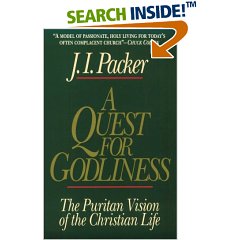
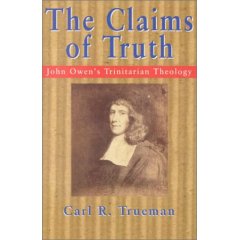
There are riches in these pages I tell you. Use these books as an entry point to a first reading of the man himself. Packer's The Quest for Godliness, or with the British title Among God's Giants, was my guide to the Puritans during my student days. By Packer's own admission John Owen is the hero of the book. His introduction to Owen's The Death of Death ("Saved by His Precious Blood") is surely one of the finest pieces ever to have come from Packer's pen.

Packer refers to the English Puritans as the Giant Redwoods of the Christian life, or (if you prefer it) think of them as the Ents of Middle Earth.

My advice would be to read the books in this order Packer, Ferguson, Trueman.

Like many others I was awestruck, instructed, rebuked and strengthened beyond what words can express when, as an undergrad, I read Owen on the Mortification of Sin, Temptation, and Indwelling Sin. Sometimes the right book comes along at the right time in your Christian experience. My own testimony to these works is echoed by many others.

For theological depth and experiential enrichment I often turn to Communion With God.

The Classical Distinction between Orthodoxy & Heresy


The classical distinction between orthodoxy and heresy was well understood.

"With only a few latitudinarian exceptions, both the heretics and the orthodox...were agreed throughout the controversies from 100 to 600 that there was only one true doctrine, which each party claimed to possess. The truth was one, and there could be no pluralism in its confession; one's opponents were not merely espousing a different form of Christian obedience, they were teaching false doctrine. The heretics were no less implacable than the orthodox in claiming that only their position was the correct one."

Jaroslav Pelikan, The Emergence of the Catholic Tradition (100-600), p. 69

Nothing much has changed today has it?

Tuesday, October 03, 2006

Ambition is the Mother of all Heresy

In his comments on Acts 20 Calvin wrote the following provocative sentence:

"Ambition is the mother of all heresy."

Isn't that intriguing? Calvin goes on:
"And as this place teacheth that almost all corruptions of doctrine flow from the pride of men, so we learn again out of the same that it cannot otherwise be, but that ambitious men will turn away from right purity, and corrupt the word of God. For seeing that the pure and sincere handling of the Scripture tendeth to this end, that Christ alone may have the preeminence, and that men can challenge nothing to themselves, but they shall take so much from the glory of Christ, it followeth that those are corrupters of sound doctrine who are addicted to themselves, and study to advance their own glory, which doth only darken Christ."

Monday, October 02, 2006

Reformation Impossible?

Two questions to ponder:

1. Once a denomination, or Christian organisation, becomes riddled with heresies and heretics do they ever make a comeback?

2. Once a preacher has crossed over into error do they ever come back to the truth?

A few years back I asked the first question to the Baptist Minister, and Church historian, Robert Oliver. He paused...I waited...and in the end he could only think of the recent conservative resurgence among the Southern Baptists. He didn't think that the Brits were very good at this sort of thing. Once we lose our institutions they are gone for good.

Now, of course, there are renewal movements within theologically, and morally, compromised denominations. But is that all that they have ever been, or will be?

Dave Bish has some thoughts on this after hearing Carl Trueman. The title will take you there.

This is what Liberalism did for the churches

They poisoned pulpits, emptied pews, and what is far worse ruined the spiritual lives of generations. I shudder to think what the implications of the Liberal agenda will be for the final state. They took away Christ and his Word. They changed the gospel for philosophy.

There are important continuities and discontinuities between the effects of Modernism and Postmodernism on Christian believing. But for all its cultural rootedness, Liberalism was a mindset of accommodation and appeasement. And for that reason it stands as a warning from history to evangelicals who are heading down that road because, quite frankly, they have lost their confidence in the gospel and Christ's Lordship over intellectual and cultural history.

I have enjoyed reading Ron Gleason's blog series on John Leith's Crisis in the Church. The following extract is Gleason's commentary on some perceptive remarks from Leith's book.

It is a salutary warning about the emptiness of the theology that comes from Athens...or Tubingen, or Marburg, or Paris.

“Theology written in German universities and in the tradition that began with Schleiermacher fascinates many American theologians today. This theology has many striking qualities: generally a wide philosophical background, an intellectual cleverness, and not infrequently a pedantic quality. Yet those who are fascinated with this theology have not, to my knowledge, taken seriously the ineffectiveness of this theology in Germany itself and in Europe.” Leith is spot on with this analysis.

His bottom line for seminary professors and students therefore is: “Is the theology of the university preachable so that it can sustain congregations over a period of time?” That is to say, “…the capacity of certain theologies to gather congregations, nurture and sustain them, and to transform the social order and the weakness of other theologies in their inability either to establish strong communities or to sustain Christian congregations must be taken seriously.”

Wonderful Orthodoxy

A great way to start a Monday morning.

Here is an extract from the Letter to Diognetus.

Michael Haykin describes it as "the cream of second century apologetics." Click on the title of this post to see his recommendations for reading the early church fathers from scratch (at his blog Historia Ecclesiastica).

"O the overflowing kindness and love of God toward man! God did not hate us, or drive us away, or bear us ill will. Rather, he was long-suffering and forbearing.

In his mercy, he took up the burden of our sins. He himself gave up his own Son as a ransom for us—the holy one for the unjust, the innocent for the guilty, the righteous one for the unrighteous, the incorruptible for the corruptible, the immortal for the mortal.

For what else could cover our sins except his righteousness? In whom could we, lawless and impious as we were, be made righteous except in the Son of God alone?

O sweetest exchange! O unfathomable work of God! O blessings beyond all expectation! The sinfulness of many is hidden in the Righteous One, while the righteousness of the One justifies the many that are sinners.

In the former time he had proved to us our nature's inability to gain life; now he showed the Saviour's power to save even the powerless, with the intention that on both counts we should have faith in his goodness, and look on him as Nurse, Father, Teacher, Counselor, Healer, Mind, Light, Honor, Glory, Might, Life—and that we should not be anxious about clothing and food."

Sunday, October 01, 2006

Heresy Attacks: Piper on bad theology


"Bad theology will eventually hurt people and dishonor God in proportion to its badness."

John Piper, A Godward Life Vol. 2, p. 377

What's that coming over the hill?

There are some great resources for combatting "Bad Theology" available at Monergism.com

Monergism is a first class theological website that you should bookmark asap and frequent often. Click on the title of this post for the link to "Bad Theology".

There is a very helpful five page pdf. file at the top of that page by Phil Johnson of Pyromaniacs on "The History of Heresy: Five Errors that Refuse to Die".